
Better at Chess

Find the mistakes you keep making

The same habit looks different in every game, so it keeps costing you without you noticing. Better at Chess, for iPhone, analyzes all your recent Chess.com and Lichess games at once, names the mistakes you keep making, and trains them with positions from your own games.

Download on the App Store

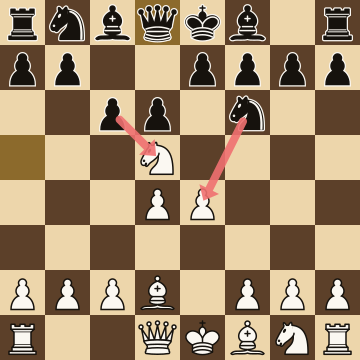
Move 6, White to play: the pawn on c6 attacks the knight on d5, and the knight on f6 attacks e4.
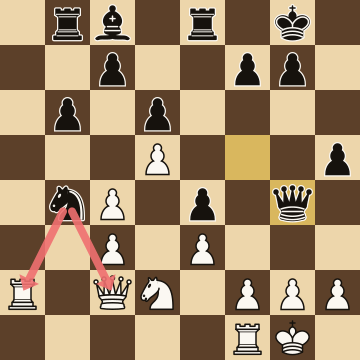
Move 21, White to play: the knight on b4 attacks the queen on c2 and the rook on a2.
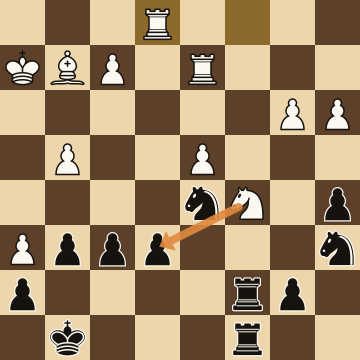
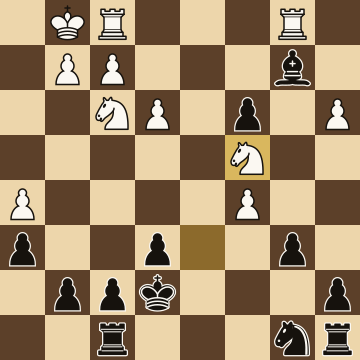
Move 35, Black to play: the knight on c5 attacks e6, with the rook behind it on e1.

One habit, three different games

One at a time, these look like three unrelated blunders. Side by side they are the same mistake: the opponent already had a threat on the board, and the move played didn't deal with it.

Reviewing one game at a time never shows that. Better at Chess puts your recent games side by side, so the habit behind your blunders gets a name.

  • Move 6, White to play

    The pawn on c6 hits the knight on d5, and the knight on f6 hits e4. Played Ne3, saving the knight, and Black took on e4. Better: Nxf6+.

  • Move 21, White to play

    The knight on b4 hits the queen and the rook on a2. Played Qa4, saving the queen, and Black took the rook. Better: cxb4.

  • Move 35, Black to play

    White's rook has just come to e1, behind the knight on c5 that hits e6. Played Nf4, and White took on e6 with a fork. Better: Nxc5.

Analyze all your chess games at once

Every move of your recent games is checked by a chess engine. Each mistake goes into a named habit and gets counted, so you see the recurring patterns instead of single mistakes, and which ones cost you most.

Progress rates six areas, from tactics to time use. Pick one to see the habits behind it.

Progress

Last 50 games

Needs work

73 of 219 moves were mistakes or blunders

58%Good

8%Inaccuracy

16%Mistake

17%Blunder

Patterns

  • Missed Freebie20 times in 14 games
  • Tunnel Vision16 times in 11 games
  • Right Idea, Wrong Move15 times in 13 games
  • Giving Ground6 times in 5 games
  • Hope Chess4 times in 4 games

Every count leads back to the move

Tap any habit in the app and see the moves behind it: the position, what was played, and what was better. Step through this one.

Black to play.

White's rook has just come to e1, next to the knight on c5 that already hits e6.

Move 35, Black to play. White's rook has just come from c1 to e1; White's knight on c5 attacks the pawn on e6.

Move 35 · Black to play

Last moveRe1

Training built from your own games

It starts with the habit that costs you most, and one question to ask at the board. You find the right move again in your own positions, solve puzzles on the same idea, and judge quick boards: safe, or a gift? Boards you miss come back until you get them.

First up · Tactical

Tunnel Vision

“Before every move, ask what your opponent's last move attacks.”

  • Your positions3 boards
  • Puzzles5 boards
  • Safe or gift?8 boards
  • Your positions3 boards
  • RedoMissed boards

Your positions

Move 21 · White to play · Board 1 of 3

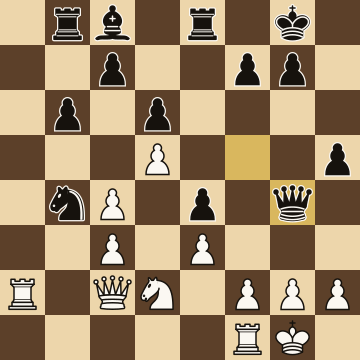
Move 21, White to play, after Black's queen took on g4.

Black's queen has just taken on g4. Find the move again.

Puzzles

White to play · Puzzle 1 of 5

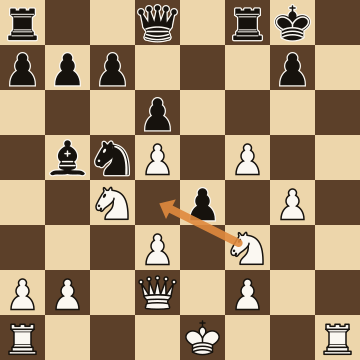
Puzzle, White to play. The arrow shows the tempting move Nd4.

One move looks tempting. Find a better one.

Safe or gift?

White to play · Board 1 of 8

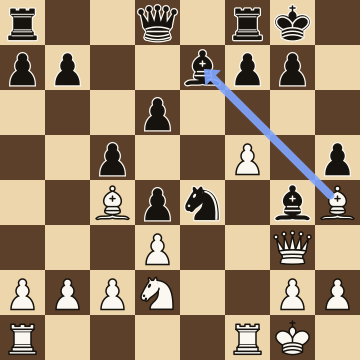
White to play. The arrow shows the move Bxe7.

Is Bxe7 safe, or a gift?

Show the answer

A gift: after Bxe7, the reply is Nxg3, taking the queen.

Your positions

Move 20 · Black to play · Board 1 of 3

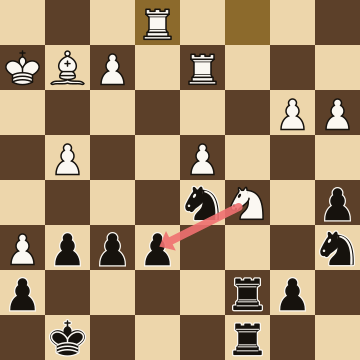
Move 20, Black to play, after White's knight came to c4.

White's knight has just come to c4. Find the move again.

Redo

The boards you missed

Missed a board in this stage? It comes back here, until you get it.

Then the next stage, picked from your newest games.

Ten habits, by name

The habits Better at Chess finds in your games, what each looks like on the board, and the question that catches it before you move.

How to stop hanging pieces: Tunnel Vision, Hung a Piece and Hope Chess on real positions

16 times in 11 games · Tactical

Tunnel Vision

Your opponent already threatened something, and your move didn't deal with it.

The question to ask

Before every move, ask what your opponent's last move attacks.

20 times in 14 games · Tactical

Missed Freebie

A recapture, an unprotected piece or pawn, or a forcing line would have won material, and you played something else.

The question to ask

After each opponent move, look for their loose pieces.

15 times in 13 games · Tactical

Right Idea, Wrong Move

You captured, but another forcing move was better.

The question to ask

Before you capture, name one other check or capture.

15 times in 12 games · Positional

Walked Into a Trap

Your move looked safe, but your opponent's best line won material a move or two later.

The question to ask

Before a quiet plan, look two moves ahead for what it leaves loose.

14 times in 10 games · Calculation

Too Quiet

A check, capture or promotion was the strongest move, and you played a quiet one.

The question to ask

When a check or capture is on the board, calculate it before a quiet move.

4 times in 4 games · Tactical

Hope Chess

Your move let the opponent answer with a strong check or capture, or win material.

The question to ask

Before each move, list the opponent's checks, captures and threats.

2 times in 2 games · Openings

Uncastled King

Your king was still on its starting square at move 8, when castling was best or your opponent's line gave check.

The question to ask

By move 8, castle unless you can name a reason not to.

Once in 1 game · Tactical

Hung a Piece

You moved a piece or pawn to a square where it can be taken, or where the trade loses it.

The question to ask

Before you put a piece on a square, count its attackers and defenders there.

Once in 1 game · Tactical

Missed Fork

The best move attacked two targets at once, and you didn't play it.

The question to ask

When two enemy pieces are loose, look for a move that hits both.

Once in 1 game · Positional

Bad Trade

Your capture started a trade that cost you material, and you didn't win it back.

The question to ask

Before an exchange, count every capture on the square to the end.

Other ways to look for them

All of them start with your own games. They differ in how many games they look at, and how much of the sorting is left to you.

  • Review the game you just played

    An engine shows where that game turned. Seeing that today's loose knight is last week's habit is up to you.

  • Look at stats across your games

    Accuracy by phase, results by opening, time per move. Averages point to an area; the moves behind them stay hidden.

  • Read all your recent games at once

    Better at Chess names and counts every habit, shows the moves behind each count, and builds your training from them.

Questions

Why do I keep making the same mistakes in chess?

Usually because you can't see them repeat. The same habit turns up in different openings and different positions, so each time it looks like a new mistake, or bad luck. Once it has a name and a count, it stops hiding.

Can I find them by reviewing my own games?

One game, yes: an engine shows where it turned. The repeats are harder, because they only show across dozens of games. Better at Chess reads them all at once and names what keeps coming back.

Is there an app that analyzes all my chess games and tells me what to work on?

Yes. Better at Chess, for iPhone, reads your recent Chess.com or Lichess games, sorts every mistake into a named habit and counts it, then builds your training from the habits that cost you most. Get it on the App Store.

Is it an AI chess coach?

Every move of your games is checked by a chess engine, and each mistake is sorted into a named habit by the same fixed rules every time. Every count opens on the moves behind it, so you can check each one yourself.

How many games does it need?

It works best with 30 or more recent games. Your chess profile is ready once your games are read.

What is tunnel vision in chess?

Your opponent already threatened something, and your move didn't deal with it, usually because you were busy with your own plan. The question that catches it: before every move, ask what your opponent's last move attacks.

What is hope chess?

Playing a move and hoping the opponent misses the reply. In the app's terms: your move let the opponent answer with a strong check or capture, or win material. Before each move, list the opponent's checks, captures and threats.

Does it work with Chess.com and Lichess?

Yes, both. You link a public username, one or both. We never ask for your password or a sign-in to those sites.

Does it promise a higher rating?

No. It tells you what to work on, from your own games, and gives you the work. The rest is practice.

What does it cost?

Your chess profile shows the habits your own games repeat most. A subscription adds your training, Progress, Games and Review: 7 days free, then $59.99 a year, or $8.99 a month without a trial.

See what your own games keep repeating

Link your Chess.com or Lichess username, and your chess profile is ready once your games are read.

  • Your chess profileThe habits your games repeat most
  • Training7 days free, then $59.99 a year

Get it on the App Store See how it works